People.ai's design system underwent three major changes between 2018 and 2022; each change had different objectives and challenges.
Over the course of my time at People.ai, I had taken over the management and maintenance of our component library with the intention of building it out into a full design system to improve consistency within our product and efficiency for our team when working.
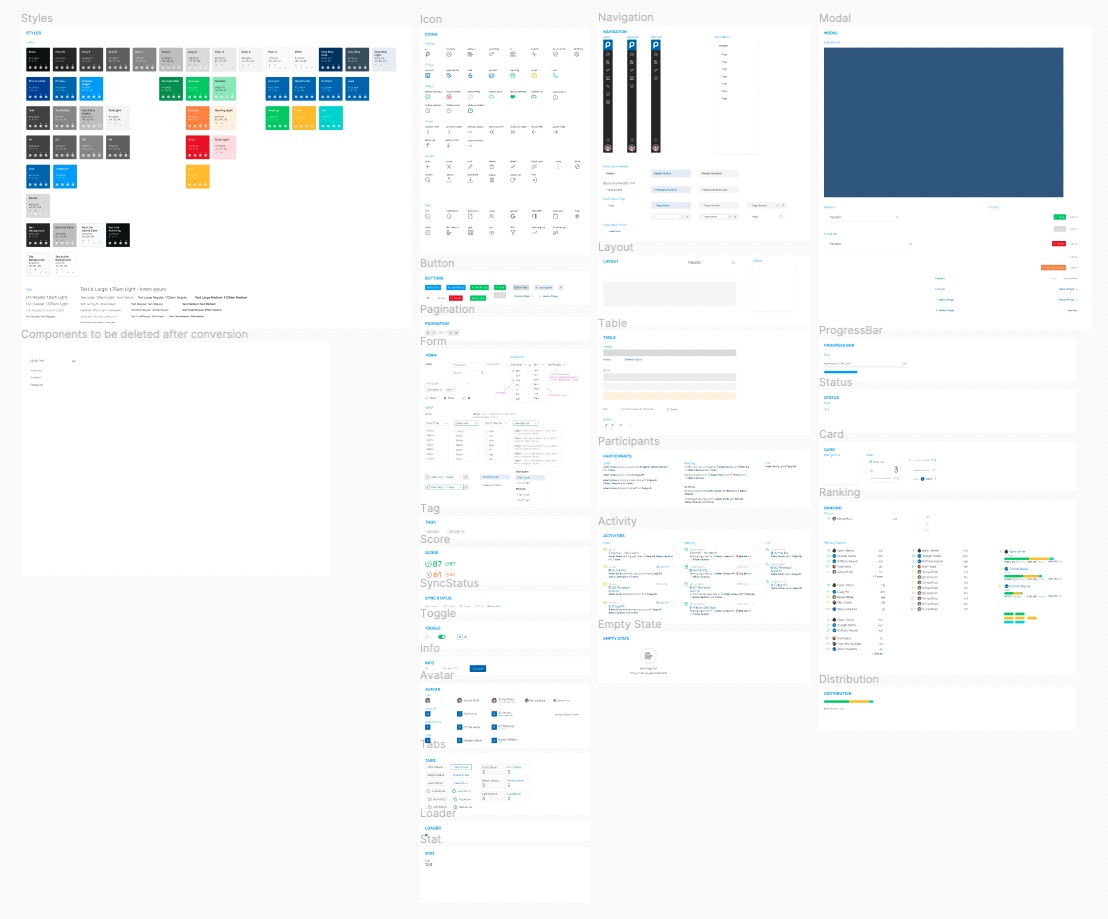
When I joined People.ai, the team had a component library that covered what was in the application that covered various basics, but also left room for interpretation otherwise:
Our marketing team began to work on a brand refresh, including a new logo and a new identity. Between this and another designer beginning to work on data visualizations, I began working closely with our marketing creative director on a new color system for our application.
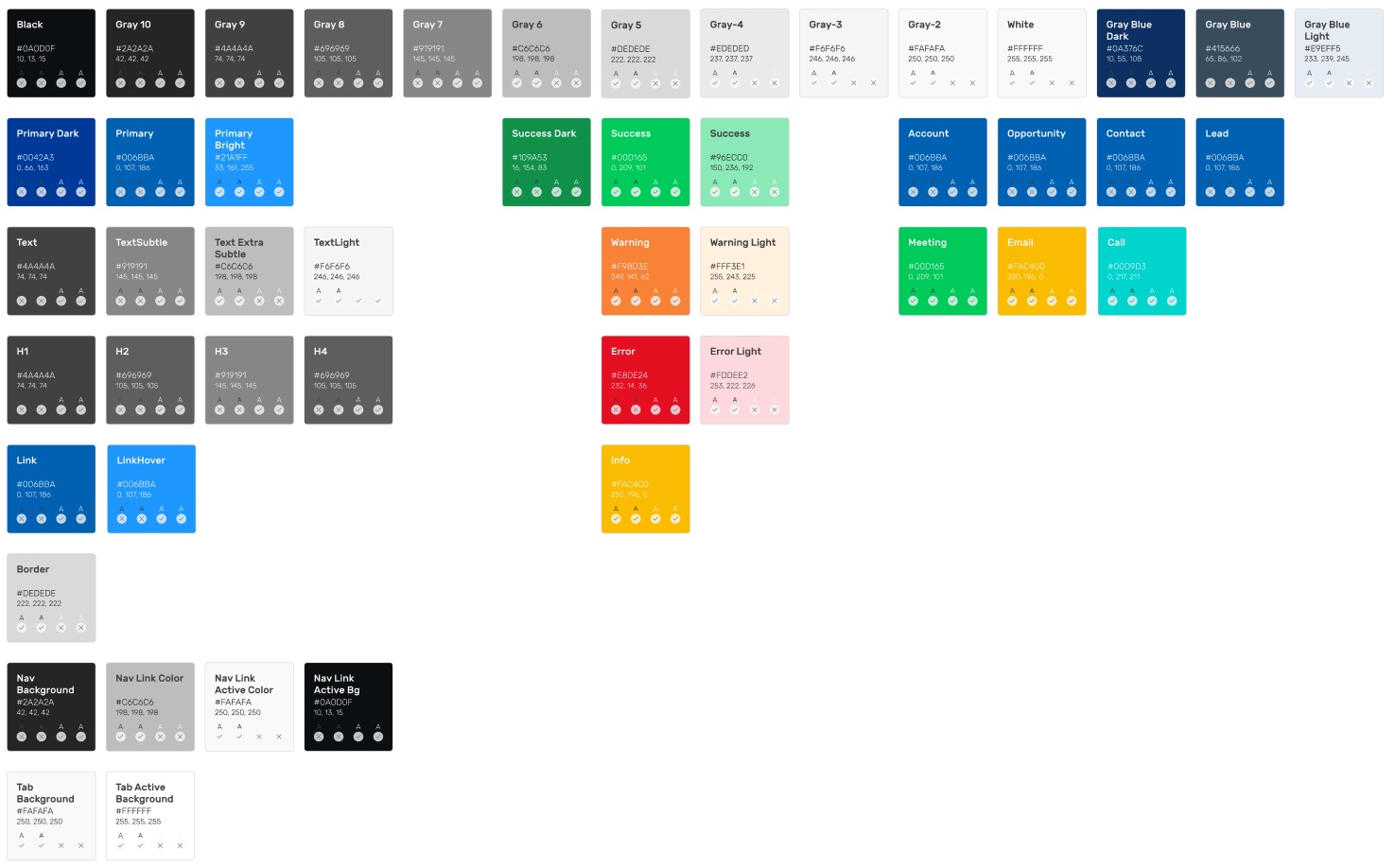
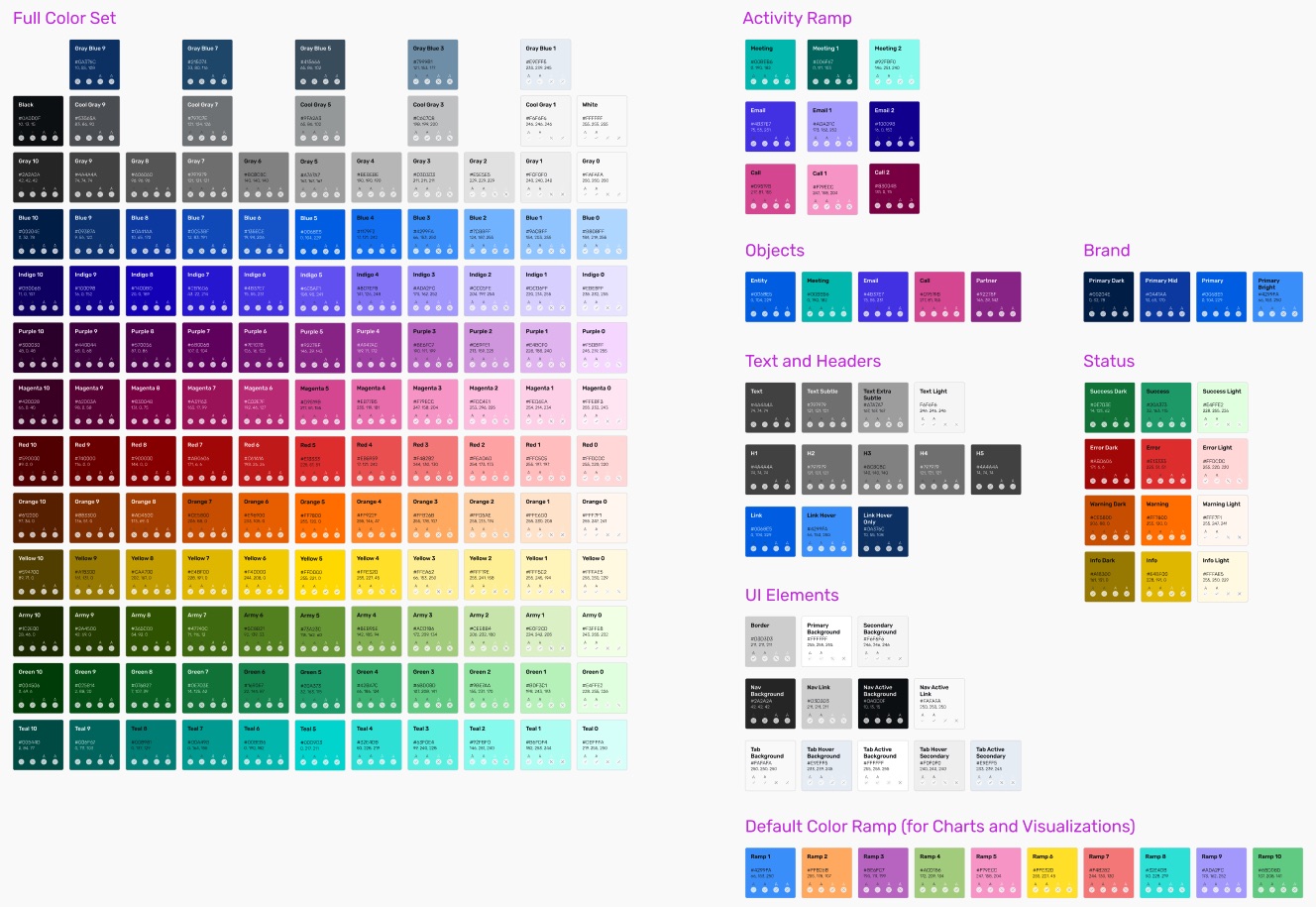
People.ai's initial color system (left) versus the expanded color system (right).
In 2020 and 2021, People.ai made acquisitions that added differing products with different design paradimgs to its product portfolio.
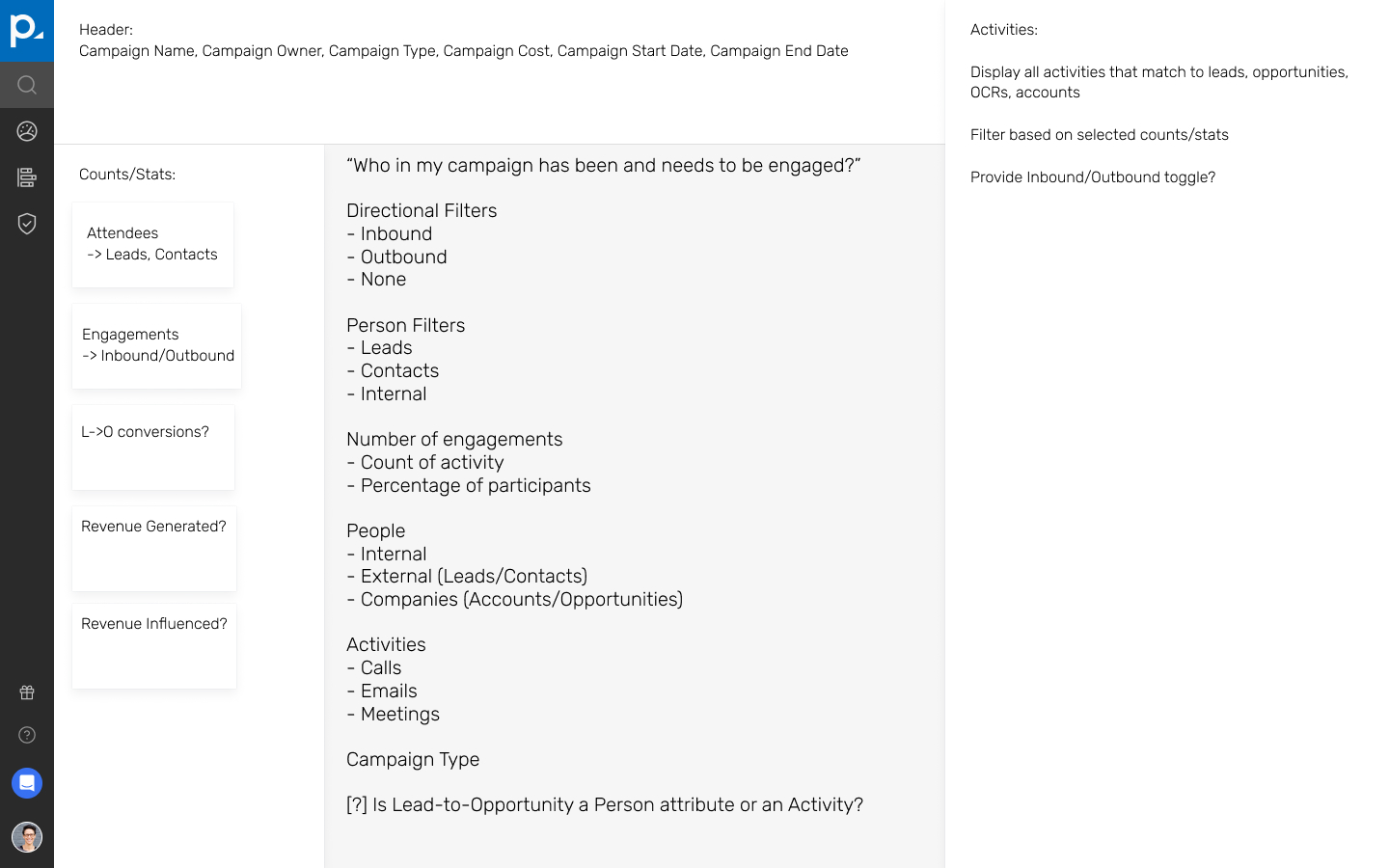
In addition to user interviews and internal shadowing, I also went through reports generated by our internal marketing operations and sales operations managers to get a sense for how the two different organizations slice, dice, and use our data. We also had walkthroughs of some of the reports that our customers generate and use as additional reference. The goal was to find what the commonalities of these reports are so that we had a qualitative basis for what "alignment" between the two organizatons could mean.
The product manager and I also had a second round of customer interviews where we also spoke with sales operations and SDR managers in addition to following up with some of the marketers we had spoken with previously. I had created some sketches based on the overlapping data from the different reports to help address the marketing pain points that we had identified, and we not only further looked into the dynamic between sales and marketing but also gathered some feedback on our concept during these interviews.
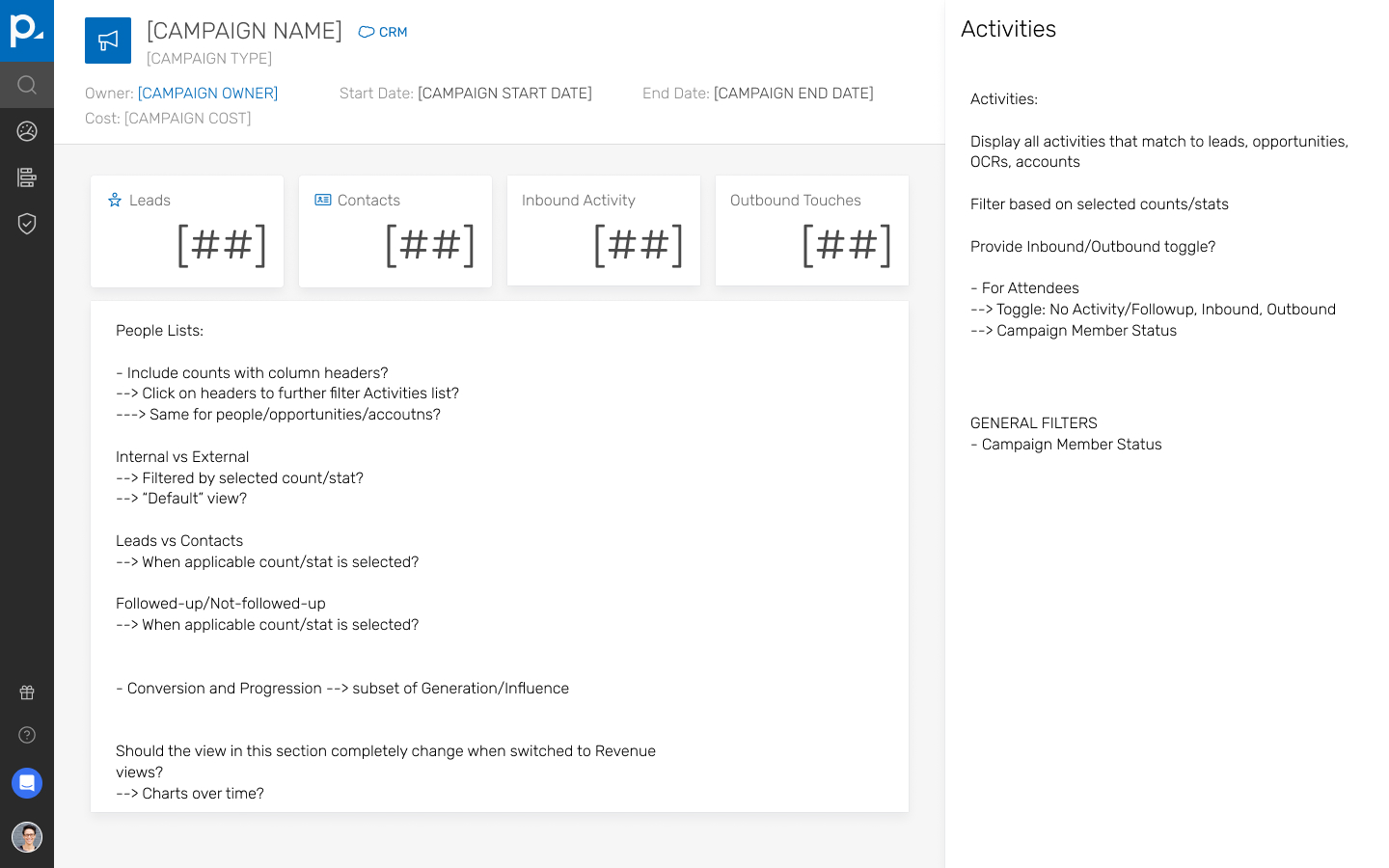
During this process, we were asked to work with engineering to create an early proof-of-concept that could be demonstrated at an upcoming conference. During that second round of customer interviews, we were able to divide the data pertaining to marketing campaigns into a "good to know" bucket and a "what is actionable" bucket, and we used everything we had collected and synthesized so far to create the proof-of-concept:
This proof-of-concept was shown at the SiriusDecisions 2018 conference, where we were able to collect feedback from hundreds of conference attendees.
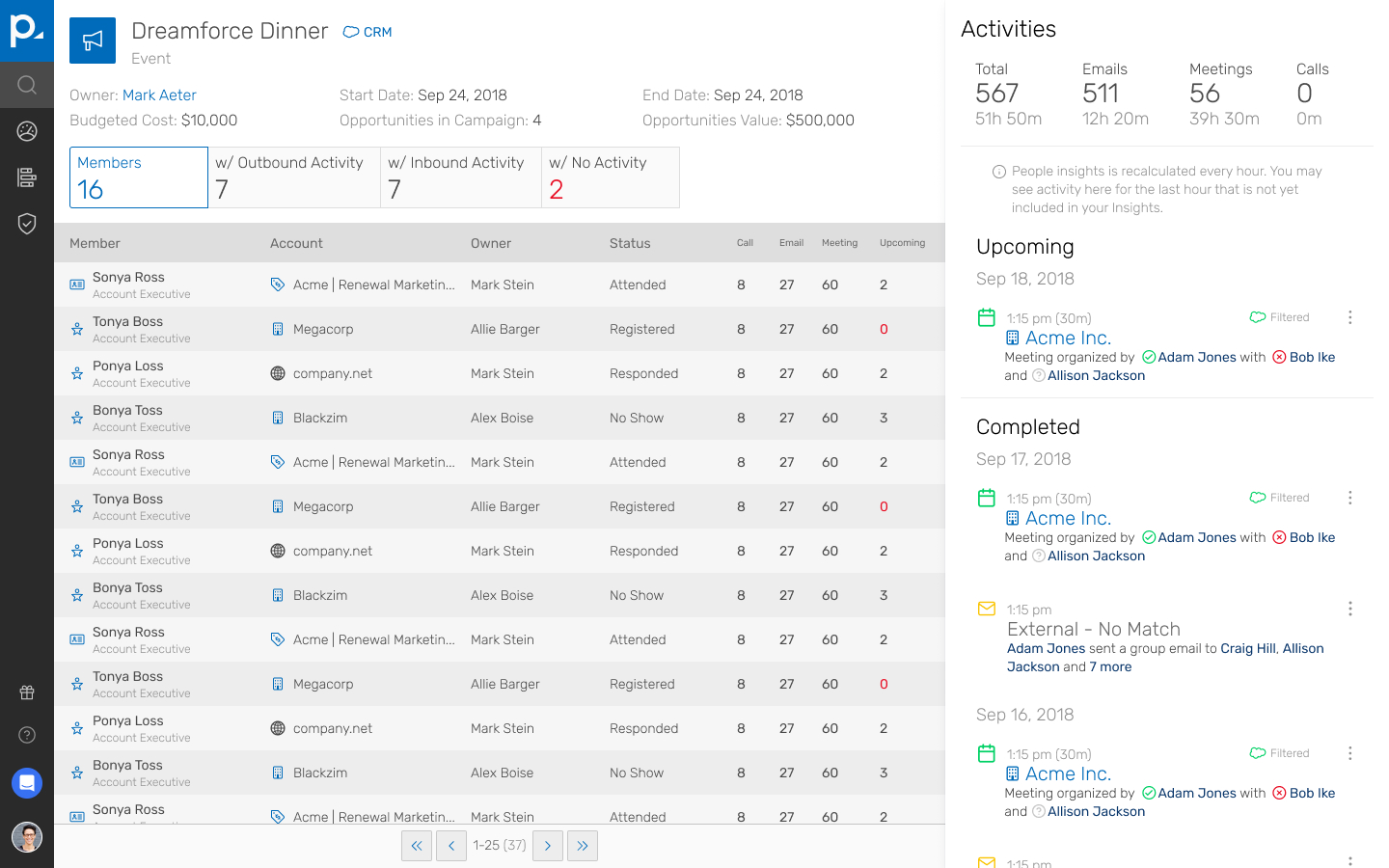
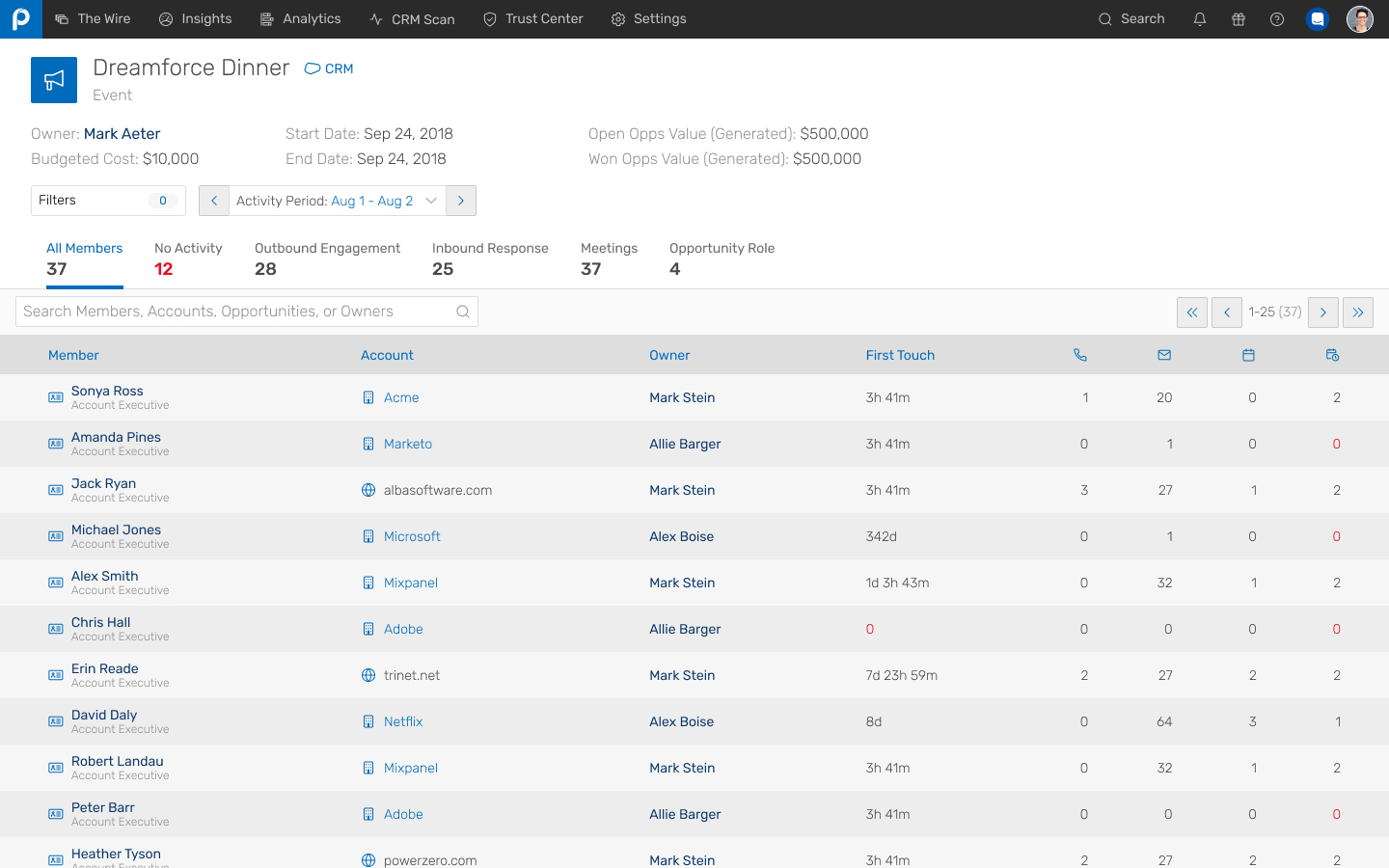
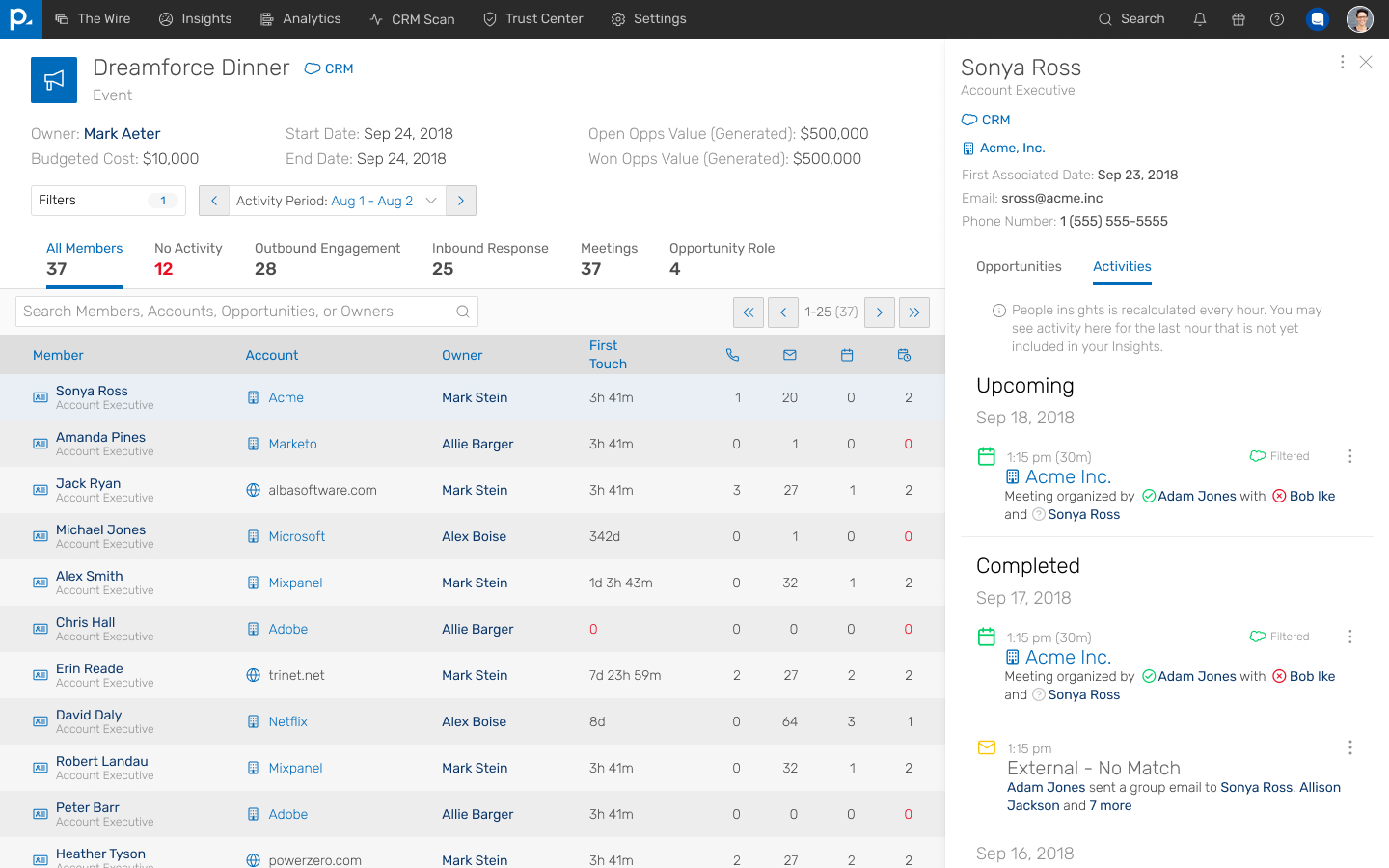
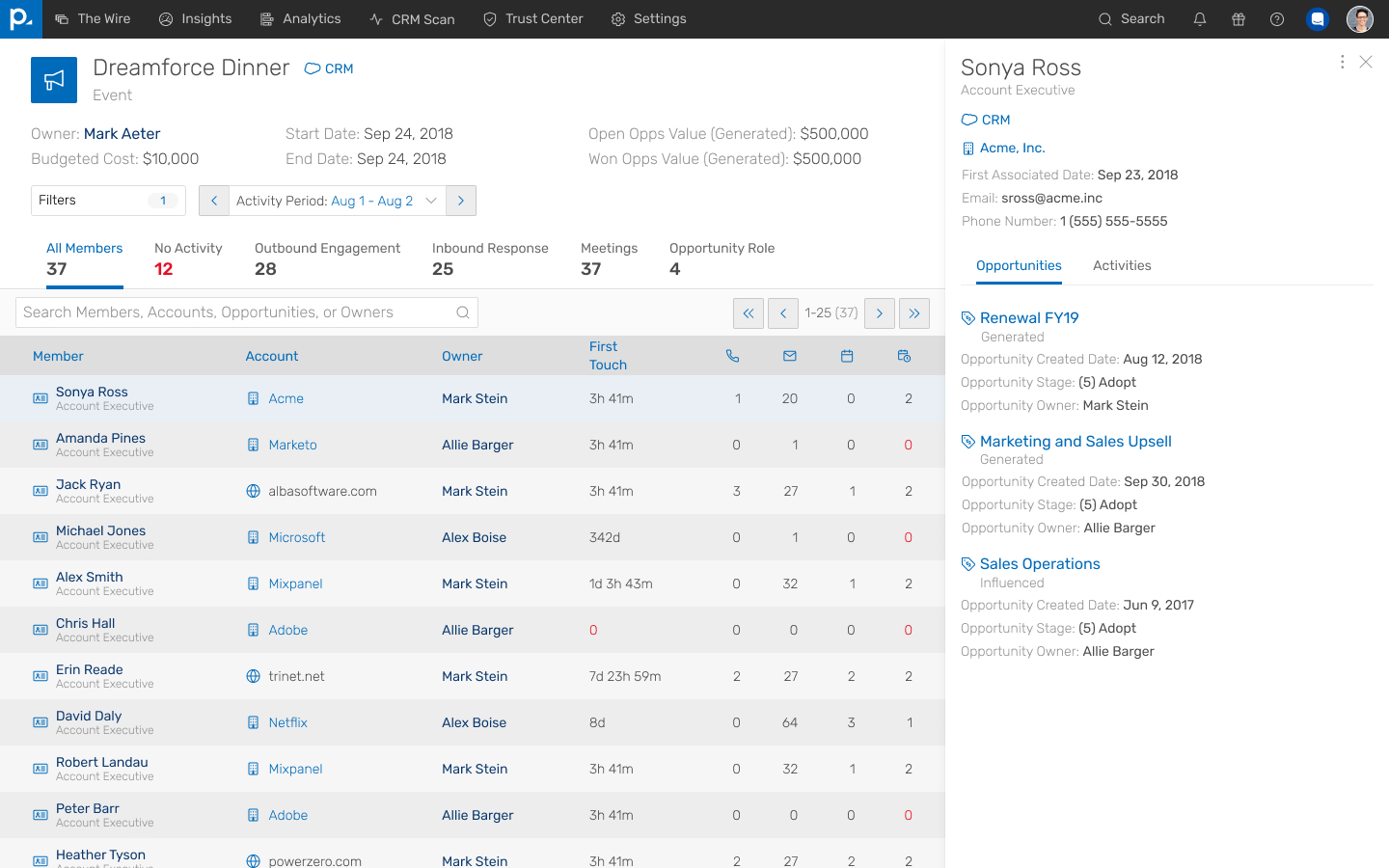
I continued to iterate on the design for Campaign 360 by working closely with our marketing to further flesh out what the stages of a customer's lifecycle is and to help work everything into different user journeys.
Our product manager, as well as our customer success team, worked with a couple of customers to conduct further validation of this offering as well as begin to enable customer roll-outs.
Up until it was discontinued in mid-2020 due to a pivot towards a focus on front-line sales managers, Campaign 360 consistently had the highest engagement rate out of all the modules in People.ai's web app since its release in February 2019, as well as a 100% retention rate for the first 13 months. However, it only had 6 weekly active users by the time it reached EOL (it had seven at the onset).
Feedback from users has included one customer stating that their global demand center has begun to rely on Campaign 360 to inform their decision-making.
There were a couple of lessons learned that were applied towards streamling and improving later projects: